Amy Guion Clay
Website:www.amyclay.com
Social Media: Instagram
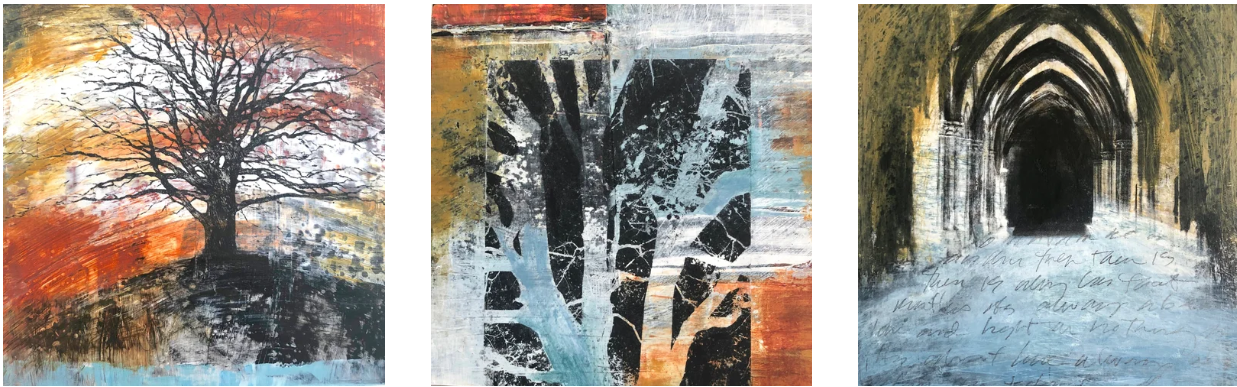
Amy Guion Clay is a mixed media painter and printmaker who has been doing artist residencies since 2009. Travel and art are in her bones. She has been to over 35 residencies around the world, including such countries as Turkey, India, Spain, Scotland, New Zealand, Australia and Iceland.
Her work is very much related to PLACE and how one’s environment impacts the art that is created. It is also about the longing to explore and discover new lands, and to respond to each place with presence and gratitude.
When she’s not traveling the world as an artist in residence, she lives in Colorado near the Rocky Mountains. She also teaches small groups of creatives how to find their own unique visual language, as well as coaching individuals to create their dream artist life.
What types of residencies have you found most supportive of artistic growth
My favorite residencies have been when the hosts are onsite and available and involve the artists in the local community. This is especially important when in a foreign country where one doesn’t speak the language. I also find it motivating to have an exhibition or Open Day at the end of the month long stay. It creates more impetus to complete the work while at the residency.
Where have you seen programs fall short (logistics, expectations, resources)?
I was recently very disappointed by a residency on an island off the coast of Estonia. It was quite remote and there was no host or other artist there, and the local people were not welcoming at all. The environment was also not inspiring, so there was little to recommend it. I left early, which is very rare for me. And it was an expensive mistake since I didn’t receive any compensation.
I’ve been to other residencies that were remote with no easy way to get food, studios that had broken windows in the cold winter, occasionally a rude host that wasn’t interested in helping the artists, and studios with no tables to work on and very little light!
But these are very rare situations - mostly my experiences have been wonderful, inspiring and I have made life long artist friends around the world!
What kinds of facilities, support, or program components did you appreciate most?
Its’ really important to me that the accommodations are quiet enough at night that it is conducive to good sleep. I’ve stayed in rowdy, uncomfortable places that could be quite noisy. If I am not sleeping, I find it difficult to be inspired and focused.
Having a private accommodation - such as a separate apartment or cottage is also wonderful, although not always possible. Although it’s also great to have some shared meals on a regular basis. I also really appreciate a spacious, light and private studio.
And I’ve also stayed at several residencies where they actually provided us with our own chef - which was amazing!
Are there ways residencies can help applicants prepare before applying (e.g., clarity on time commitments, materials, expectations)?
Yes, all of the above. A residency is a big commitment for most artists, especially if they have to travel very far. The cost is not just that of the residency but also the flight and hotels/transport along the way. This can be expensive in both time and money. There are some hosts that start a residency as a way to make money, and they don’t really care that much about the artist’s experience. Then there are other hosts who are amazing and are genuinely interested in what the artists need to be productive and fit in well in their environment. Of course that is going to be different for everybody.
Are there practical considerations (local supplies, housing, studio tools) that residencies forget to communicate?
Ideally, all of the information is easily available on the website, before you even apply. Listing the costs of the residency, pictures of the rooms, bathrooms, studios and communal areas are essential. Also, it’s important to give all the instructions about getting to the residency so the artist knows what the actual travel costs will be. It’s frustrating to have to email and ask questions before you even know if you want to apply.
If there is a special focus like printmaking, it’s important to have photos of the equipment and space and what supplies are offered or not.
When you evaluate a residency opportunity before applying, what practical criteria matter most to you?
Location, accommodation, studio, costs of the residency, how many artists there will be, how accessible and costly it is to travel there. Also I always want to know if there is food nearby and how accessible it is to get around without a car (that’s a big one). It’s vital to mention if there is good local public transportation to get food and other supplies.
I know for some artists they might just want to get away and gestate some ideas, so it’s good when there is no pressure to produce. However, I like being motivated to show my work, at least to the other artists, so I am focused and productive to some degree. I also find that 1 month is the ideal amount of time at a residency, so an Open Studio or exhibit at the end of it is a great way to close out the experience.
Describe a residency that was exceptionally well-run. What stood out (facilities, structure, communication, creative support)?
There are so many!
One of my favorite residencies was Fundacion Valparaiso in southern Spain. It was run by a very efficient Danish Foundation and was free, as well as providing us with our own chef. We had separate apartments and studios and had shared meals together. There was room for 4 visual artists and 4 writers. The foundation has since closed and the residency has changed hands. Last I checked it was a bit expensive and not sure how well it is run, but at the time it was excellent.
Another one is Obras in Portugal. What really stood out for me was the incredible support the hosts offered to the artists. They had regular shared dinners which included local artists from the community. They had a variety of accommodations and studios, and it was in a beautiful part of central Portugal. And it was reasonably priced.
What is the biggest mismatch you’ve seen between what residencies think artists want and what they actually want?
Because artists are generally independent, some hosts think they don’t have to provide much besides a space to sleep, eat and work. But that’s not the point. Generally we want to also connect with other artists, explore the region to get to know the landscape and the culture/food/etc. I know it’s a quality residency when the hosts make an effort to connect you with local people and even create an opportunity to show your work to the community. Another extra step is when they offer the chance to collaborate with local artists and/or craftspeople.
Any last thoughts or advise for people who are thinking of starting their own residency program?
It’s a wonderful thing to offer artists from around the world the opportunity to live and work in different environments globally, so I encourage anyone who is committed to the arts to create such a space!
However, consider what you are able to offer the artists and be very clear and direct about what that is from the beginning. This shouldn’t be a side gig, it’s a full time operation. Remember, most artists are on a budget, so be fair about pricing and be thoughtful about the time, effort and money it will take for someone to take time away and travel to your residency.
I think it’s important to be sensitive and aware of the different needs and personalities of artists, especially ones that are from very different cultures and languages. Artists can feel very vulnerable being away from their countries, so be patient and helpful whenever possible.
Amy also offers an E-course for artists who want to learn about attending residencies. For those who are creative and love to travel, artist residencies are the Holy Grail. From Antarctica to the Arctic Circle and everywhere between, artist residencies are dedicated places for creatives to focus on their work, travel to cool places and meet others from around the world.
Artist Residencies - An Online Course
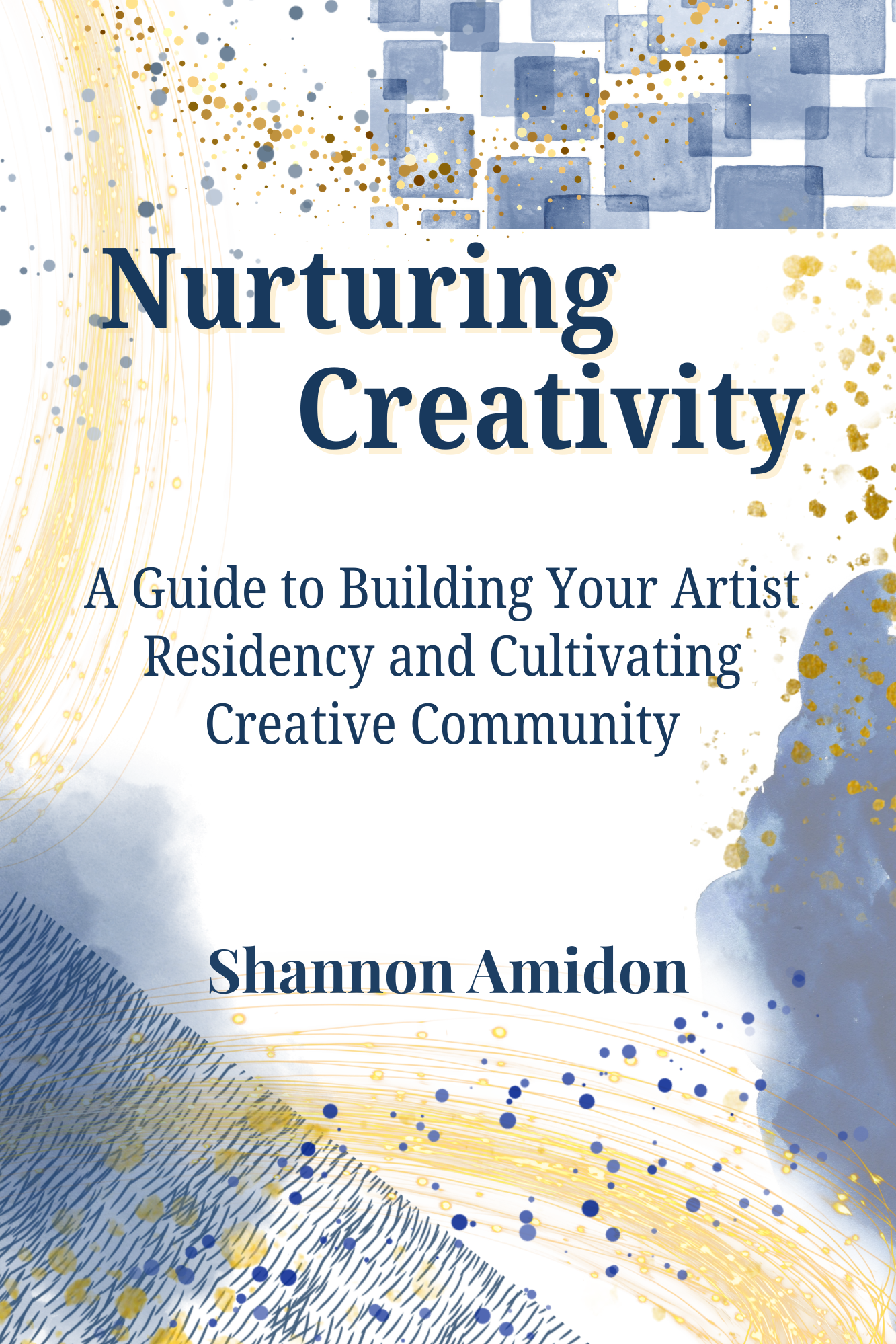
Many of the insights shared in these conversations helped shape my book:
Nurturing Creativity: A Guide to Building Your Artist Residency and Cultivating Creative Community
If you’ve ever wondered what it takes to create a residency or creative gathering of your own, the book expands on many of the lessons shared in these interviews.
Learn More Here