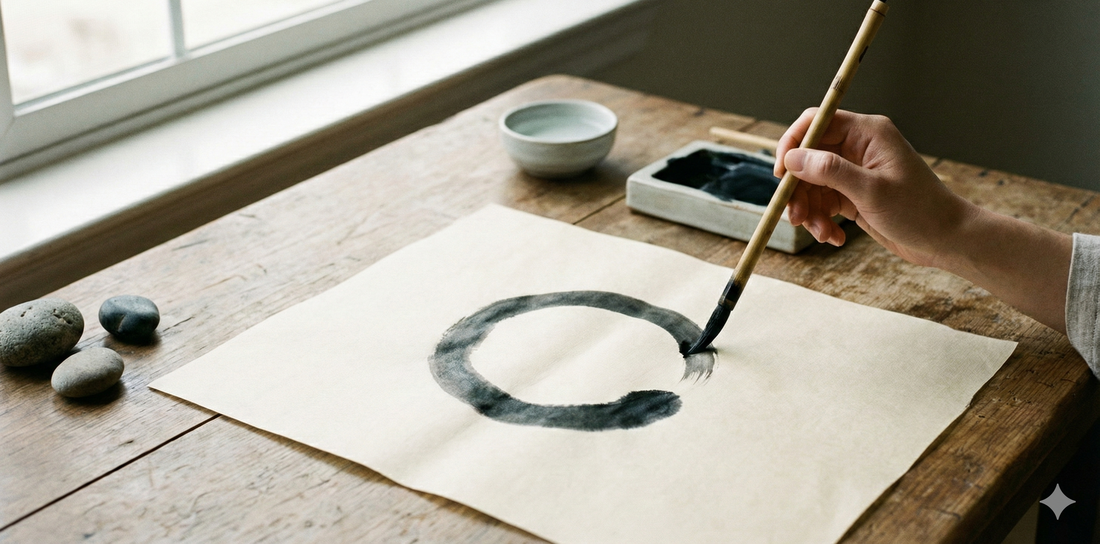
Enso Circle
Website: www.theensocircle.com
Social Media: Instagram
Location: Virtual online residency
Answers from both Michelle Belto and Lyn Belisle
Please share a brief overview of your residency program, the time length, how many artists do you typically host at a time, how many artists per year, are you discipline specific, in person/virtual, research/project or rest based.
The Enso Circle Artist Residency is a virtual program designed to support creative growth through connection and accountability/goal setting. Our residency is web-based, offering an extensive library of written and recorded resources, and we meet weekly via Zoom for group discussions and support. Each three-month term is limited to no more than twelve residents, allowing for a close-knit and personalized experience. We currently offer two twelve-week terms annually, and as Michelle says, while we are not limited to any specific artistic discipline, most of our past residents have been visual artists.
Why did you decide to start an artist residency program?
We began talking about a creative community experience in 2015 and even developed a draft of a website called Studio Sanctuary. The conversation continues for the next few years, but in 2020, Covid isolation confirmed this profound need for meaningful creative connection, mutual support, and a dedicated space where artists could grow together—no matter the geographical distance. We spent 2020 refining the logistics and the tech challenges, and the first term of the Enso Circle opened in the spring of 2021.
What were the biggest hurdles you faced during the planning and early implementation stages, and how did you overcome them?
Michelle states this so well – below. I would add that the two “aha!” moments for me were the Residency concept and the name itself, The Enso Circle, which perfectly expressed our inclusive philosophy of celebrating the imperfect, the unfinished, and the ever-evolving nature of both art and the artist’s journey.
Both Lyn and I have long been artists and educators. As we began to refine the concept, we realized that although many of the artists who would be interested in the Residency would come from our numbers past students, we wanted the Circle to be much more than a class. Lyn realized early on that we had to be “goal oriented,” meaning the goal had to come from the artist and not us. As we struggled to define what kind of community this would be, the goal became the linchpin to use a residency as the model for our structure. As we researched existing residencies, we decided that the criteria for acceptance would not be based solely on artistic excellence but rather on the resonance of the artist to the goals of the Enso Circle, as expressed in our written materials and the application process.
How did you determine the structure, length, and focus of your residency, what factors influence your programming decisions and how has this changed over time?
Again, Michelle gives an excellent summary below. I have a background in art education with high school students who have learning and behavioral challenges, and they taught me so much about how people learn. Twelve weeks is the ideal length for a goal-oriented experience that can dovetail with an artist’s broader intentions. In The Enso Circle, this structure creates a rhythm of reflection, progress, and support—long enough to foster real transformation, yet focused enough to keep energy and purpose strong throughout the term.
Lyn and I have been friends and colleagues for many years, so there is a built-in synchronization of our values and skills. As a web developer and tech “translator” to artists left behind during the last twenty years of technology, Lyn could see past most of what I saw as impossible barriers. She could also research cutting edge platforms that became the foundation of how we met, learned, shared and became community. We currently use Zoom for our weekly community meetings, break out sessions initiated by members and small group meetings. We use SLACK, as our private community gathering place. This is where we ask questions, have critique, show work in process and basically share life. Unlike FB, which is large, unwieldy with constant interruptions, SLACK allows us to create a safe space and free discussion.
The basic structure of the Residency in length and focus has not changed. We also have not changed the final exhibition that appears in an online (and print) catalog. For the most part, the weekly focus of topics applicable to all artists, such as documentation of work, inspiration and collaboration, to name just three has not changed either. The resources within the Lesson Guide have been fine tuned over time. We make it a point to look back over the weeks each term to make sure what we offer is still relevant.
We did make one major change near the end of the first residency. Most of the artists in that group refused to leave. They wanted another residency or some way to continue to grow as artists and community. We were taken aback and did some deep soul searching to see if we could both honor their request and not kill ourselves in the process. The idea of the Continuing Residency was born. We have revised and reshaped this community over the years. It has grown with a few members of each residency wanting to come into the new community and others moving in and out during the term changes. The Continuing Residency has become, I think, what Lyn and I were dreaming for ourselves all those years ago. It is a solid community of artists, with a common background in The Enso Circle Artist Residency as a foundation, each focused on a personal artistic goal, accountable to the community with a shared exhibition.
Do you have any other offerings besides the residency - workshops, events, etc.
While some of the workshops we teach online are strategically integrated into the curriculum at key points, The Enso Circle is not a workshop-based residency. Although we’ve had the joy of meeting some of our residents in person, our primary focus is on cultivating a vibrant virtual community—one that serves as an authentic, supportive haven for reflection, meaningful dialogue, and creative growth
How has running an artist residency program influenced or affected your own artistic practice and personal growth?
Facilitating The Enso Circle has deeply influenced my own artistic practice and personal growth in ways I hadn’t anticipated. It’s helped me become more organized and intentional with my creative time, more focused on setting and achieving meaningful goals. Staying current with technology and digital communication has been essential to supporting our residents, and that has, in turn, expanded my own toolbox as an artist and educator. But perhaps most importantly, witnessing the dedication and vulnerability of our residents -- artists who pursue authentic creative lives amidst the very real challenges of daily life— has been incredibly inspiring. Their courage and commitment continually remind me of the power of art to connect, heal, and transform. Being part of this circle has made me a better artist, a more empathetic mentor, and a more grounded human being.
What has been the most surprising part of starting your own residency program?
The most surprising part of starting The Enso Circle has been how deeply connected and supportive a virtual community can become. We envisioned a space for creative growth and accountability, but what emerged went far beyond that—genuine friendships, powerful collaborations, and a sense of belonging that many of us didn’t even realize we were missing. I’ve also been surprised by how universal the creative journey is, no matter someone’s medium or experience level. The vulnerability, the breakthroughs, the resilience—it’s all shared, and it’s incredibly moving. Watching artists show up for themselves and each other with such honesty and courage has been both humbling and inspiring.
What advice would you give to artists who are just starting to plan their own residency programs?
Start with your why—know the purpose behind your residency program and who it’s for. That clarity will help shape everything else. Keep it simple in the beginning; you don’t need a complicated structure or a huge group to make a big impact. Use tools you’re comfortable with, like Zoom or shared Google Docs, and build a schedule that’s consistent but not overwhelming. Plan for flexibility—things will evolve as you learn what works.
Be mindful of your budget from the start. Not everything has to be expensive—there are free or low-cost platforms and tools that can support your program beautifully. Decide what’s essential and what’s nice to have, and scale up slowly as needed.
Finally, don’t try to do it all alone. If you can, collaborate with someone who shares your vision and complements your strengths. Having a trusted partner or small team makes everything more sustainable—and a lot more fun. Most importantly, focus on creating a space that feels safe, supportive, and encouraging. Artists thrive when they feel seen and valued. If you lead with that intention, your program will grow in ways you can’t predict—but they’ll be good ones
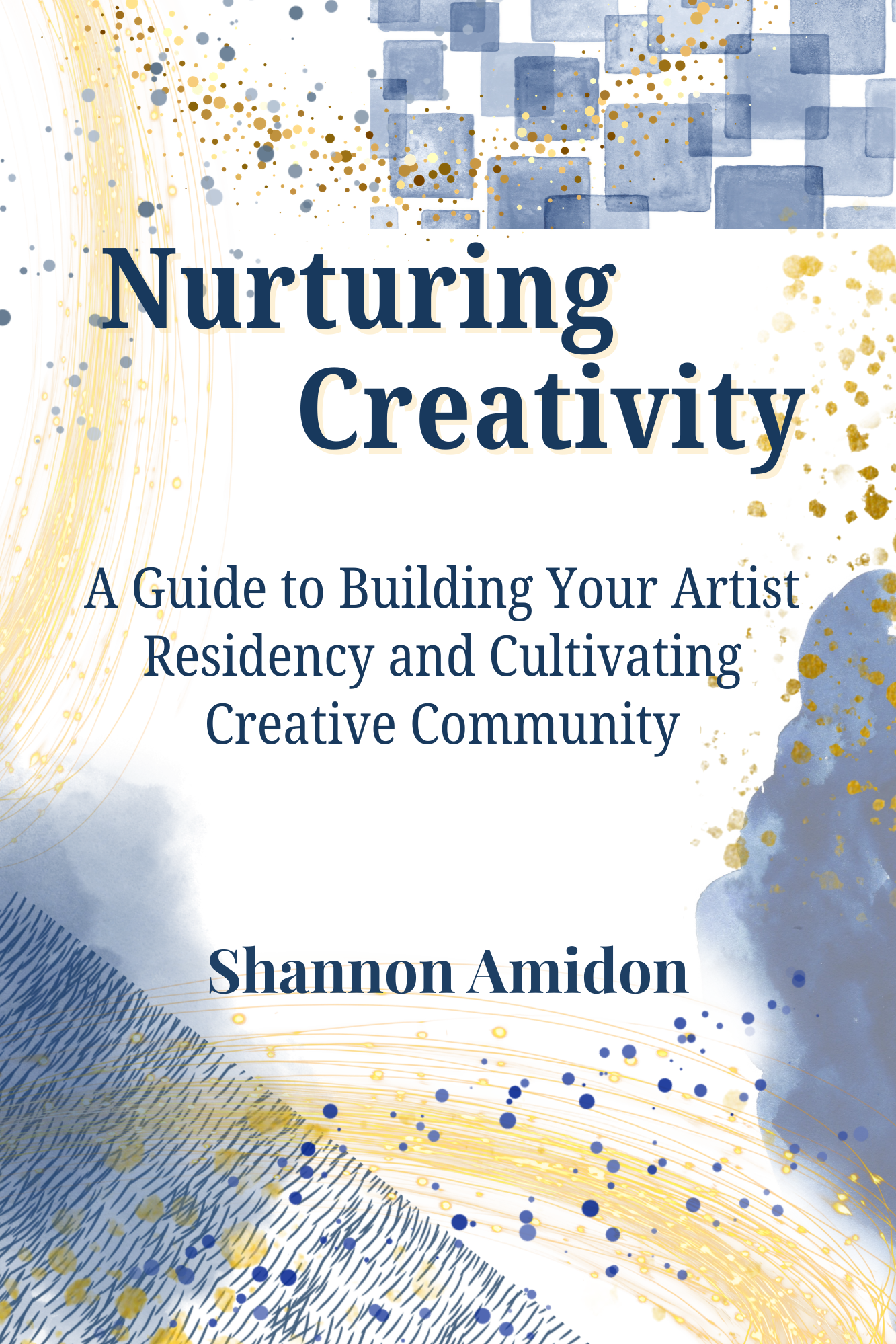
Many of the insights shared in these conversations helped shape my book:
Nurturing Creativity: A Guide to Building Your Artist Residency and Cultivating Creative Community
If you’ve ever wondered what it takes to create a residency or creative gathering of your own, the book expands on many of the lessons shared in these interviews.
Learn More Here