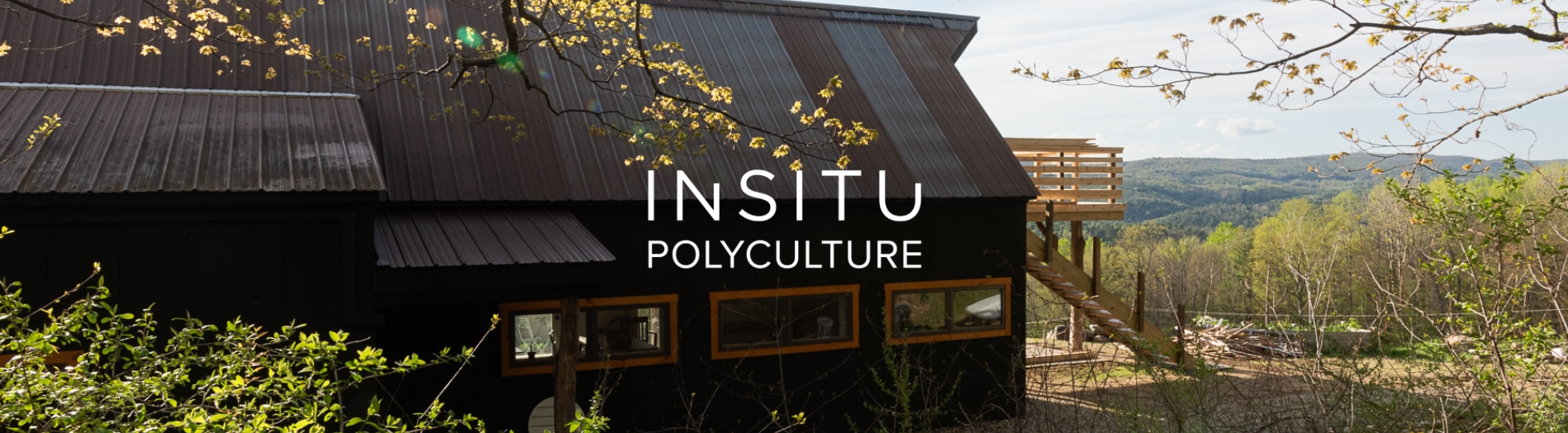
In Situ Polyculture Commons
Website: insitupolyculture.org
Social Media: Instagram
Location: Westminster, VT on unceded Abenaki Land, the Dawnland of Turtle Island
Please share a brief overview of your residency program, the time length, how many artist do you typically host at a time, how many artists per year, are you discipline specific, in person/virtual, research/project or rest based.
ISPC hosts between 2 and 6 residents at a time, both as curated groups of self-directed artists, and collaborative groups who are on-site to retreat and connect with their mutual creative practice. In 2024 we hosted 7 sessions, totaling about 30 artists over the course of the season, plus a private retreat of 11 folks. Residents tend to be both very restful and creatively productive / experimental on-site, in part due to the very intentional lack of expectation from us as the institution that they "produce" something while here.
We also host workshops and retreats of 8-12 people with visiting independent faculty and partner arts organizations, such as the Ruth Stone House (VT, poetry & literary education), and with artists and educators who are focused on ancestral skills, skill-building, art-material making and else. We have hosted workshops on parchment making from deer skin, fur tanning, ink-making, hand-made earth pigment pastels, watercolor making, tai-chi movements, and more.
Why did you decide to start an artist residency program?
The short and somewhat cliche, but very true answer, is that we are idealists and are trying to “be the change we wish to see in the world.” We want artists to have places to connect, communities that feel supportive, and more opportunities to be creative that aren’t necessarily tied to productivity. We want a decapitalized, or even anticapitalist environment for artists to make art, celebrate community and develop their creative practice.
The longer and even more true answer is that we were evicted from our art studio in San Francisco in 2014, along with 30+ others, many of whom had been in those spaces for a way longer time. We watched and fought as the city sided with real estate developers and landlords over artists, Latinx communities and small businesses which had been grounded on that block for many decades. It was peak gentrification, it broke our hearts and it forced us to find a new studio that was much further away from where we lived and was no longer a walkable / bikeable distance. Our quality of life changed drastically. It was heartbreaking! And one evening after commuting home from our new studio, long after the legal battle with the city and the developers that left us feeling totally bummed out, we got home and I said very angrily, “I would never do this to artists. I would never displace artists.” And that was the seed— because the opposite of displacing artists and being irreverent to their needs and communities, is literally making space for artists and helping resource them.
What were the biggest hurdles you faced during the planning and early implementation stages, and how did you overcome them? It took us 6 years to find a place to call home that would also serve as a residency campus.—We run the residency out of our home, even though the residency spaces and infrastructure are separate— and when we envisioned the residency we were renters living in a studio apartment in a totally different city. So the biggest challenge was the patience, the waiting, the planning without having concrete challenges to respond to.
Of course once we found our spot in 2020, the challenges of renovation, building and improving studio and accommodation space, working with some contractors and learning what we could do on the fly— all that became the challenge. And I think we had a big vision with a lot of ideas and dreams, but really anyone with a spare room can run an art residency space— artists need space and time, more than anything else. The fact that we are working to build a sauna onsite for the artists is just icing on the cake!
We benefited enormously from family support and generosity to invest in the space that we have transformed into In Situ Polyculture Commons, as well as generous mentors and advice givers with a lot more art organization experience than us. We are now doing what we can to pay forward all of the generosity we received.
How did you determine the structure, length, and focus of your residency, what factors influence your programming decisions and has this changed over time?
One of the major things I wanted to offer was calendar flexibility for artists— I think a lot of organizations make their calendars and then artists need to work around them, and of course from an administration perspective, that is much easier! But some artists can only do long weekends, or need to do commute-residences due to childcare, or have a window of opportunity to focus on their work, and it doesn’t align with standard residency schedules. We have found a lot of success in doing a little bit of extra calendar “chaos magic” and making as many exceptions and accommodations as we can— as long as the definition of success is supporting artists best. We have also experimented with providing on-site childcare and children’ programming, so as to explicitly invite and cultivate residency practice for artists who are parents. That was a particularly tricky pilot which we ran before we even had our art studio renovation completed, but the seed of it is simple— get a few artists who are parents together, hire a childcare specialist or young adult educator for set number of hours a day, and basically make up a camp that prioritizes children’s learning and creative practice alongside (but separate!) from the adults. It worked! We will do it again in the future.
We also are very interested in directly supporting interdisciplinary collaboration and collaborative practices in general. We don’t have a performance space, or even much of a public venue, but we partner with local venues to make opportunities for performers who are visiting, and we try to prioritize offering space to collaborative groups and interdisciplinary collaborators, partially because we know most other organizations do NOT do that. We allow groups to apply with a single application, name dates that work best for their whole cohort, and curate individual artist residents around the needs of the collaborators. I think its a pretty special approach. Both of ISPC’s cofounders have collaborative practices, so we are designing the infrastructure based on our experiences — its often difficult or impossible to get opportunities to align for 2 or 3 busy professionals, much less a partner venue for their work.
We are entering our 4th year but only our 2nd year with a full programming calendar and full infrastructure— so things may change. But, keeping an eye on meeting artists where they are, supporting collaboration, and offering flexible programming options will remain.
Do you have any other offerings besides the residency - workshops, events, etc.
Yes we partner with independent artists and teachers to offer 2-4 workshops a year. We are excited to platform pedagogy that is material-based, and helps to provide skill-building and re-skilling to artists and creators, as well as bridge “art world” practices with ecology, movement, conservation, social justice, and more. We also want to directly collaborate with as many other local art organizations as possible— whether its simple giving more visibility for a nearby art workshop, sending our artists to open-studios at other residencies for a field trip, or co-hosting visiting artists with nearby orgs. This means that we are never competing with our community, and we can amplify and build up audiences and understanding between us.
This year we are partnering with First Proof Press in Brattleboro, VT and a visiting printmaker, Natalie Gaimari to offer experimental organic screen printing— segueing our mission of ecological material usage and place-based making with traditional printmaking practices. We are excited about it! We hope also to implement some workshops this summer around glossy buckthorn mitigation (it is a noxious invasive in our region) with traditional Sap Green watercolor and ink making. I have been experimenting in my own practice, and have consulted with the excellent artist and color researcher, Natalie Stopka, to develop it. We hope to offer it as a sliding scale workshop that people can learn from and duplicate elsewhere (there is so much buckthorn to deal with)
How has running an artist residency program influenced or affected your own artistic practice and personal growth?
Ha— it has made it clear how difficult it is for me to code-switch between studio time / maker and residency director / host. I need to use my “off” months in the winter to do my writing and drawing and painting. However, being around other artists, learning about other processes, its super inspiring— and I also have both a curatorial practice and social practice, so the residency feels like an excellent outlet for those ways that I work. I hope to continue improving my ability to let the admin rest and focus on what is most important— art. Sometimes my board, many of whom are either working artists or art-adjacent, do a good job of reminding us about our limits and keeping us true to our own creative practices. (Us being myself and my husband and cofounder, Owen Schuh)
What advice would you give to artists who are just starting to plan their own residency programs?
Do it! And do it on a scale that feels possible and relatable to you— don’t worry about how it compares to other residencies, the artist residency network is full of strange rhizomatic branches and redundancies, which is excellent. Different kinds of artists and makers are served by different residencies, so doing what feels both imperative and true to you will open up doors for the kinds of artists you are best fit to serve. Anyone with a spare room can run an art residency space— artists need space and time, more than anything else. And they need the public and their communities to trust them, and invest in them and their work. A small vote of confidence can have a big ripple effect for a working artist.
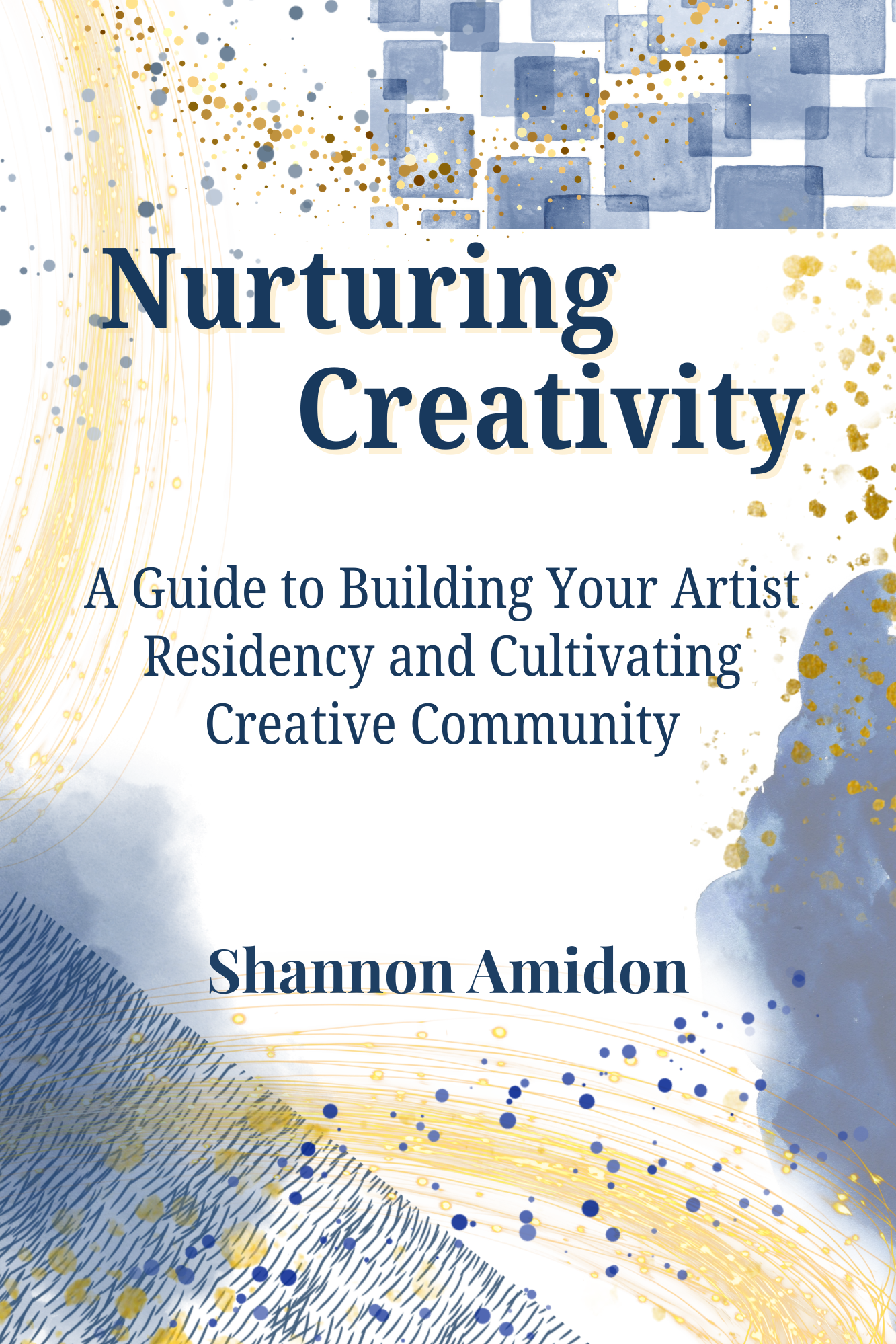
Many of the insights shared in these conversations helped shape my book:
Nurturing Creativity: A Guide to Building Your Artist Residency and Cultivating Creative Community
If you’ve ever wondered what it takes to create a residency or creative gathering of your own, the book expands on many of the lessons shared in these interviews.
Learn More Here