Kestrel Fields Studio
Website: kestrelfieldstudio.com
Social Media: Instagram Facebook
Location: Fort Collins, CO
Please share a brief overview your residency program, the time length, how many artists do you typically host at a time, how many artists per year, are you discipline specific, in person/virtual, research/project or rest based.
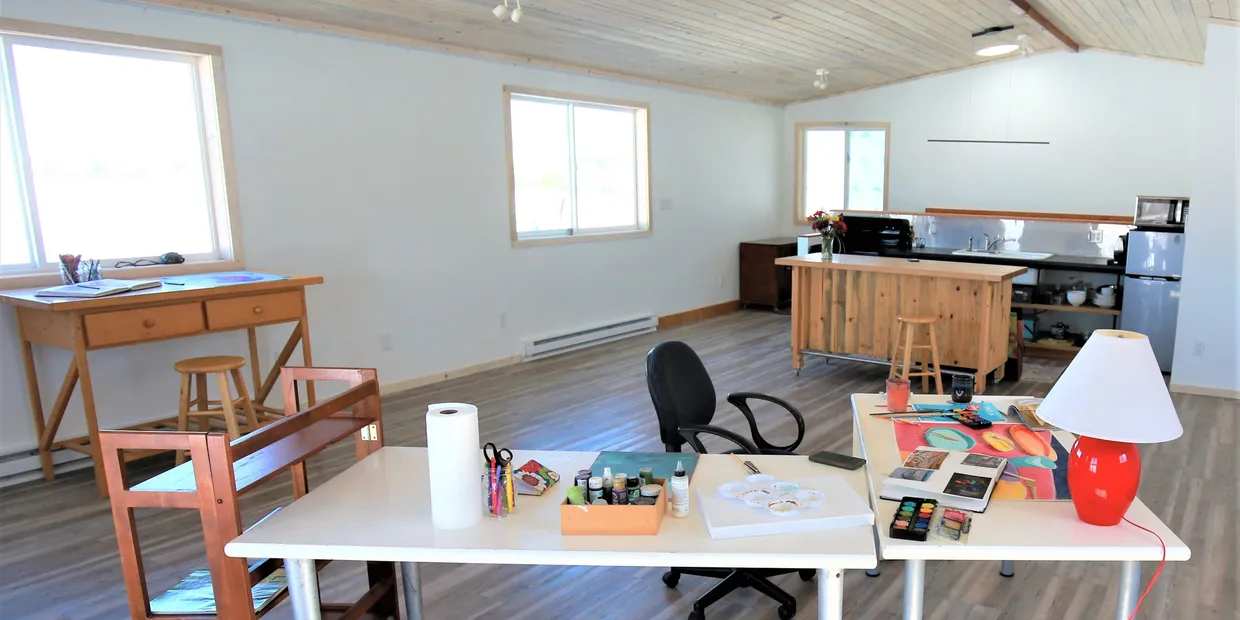
Kestrel Fields Studio’s in-person art residency program can vary in length between 1 day and ~3 weeks. The 700-ft² work-live studio space is designed specifically for an artist to work solo but can accommodate a companion or guest for part or all of the artist’s stay (although there is only one place to sleep). We host up to 20 artists per year depending on length of stay and are not discipline-specific, though we encourage and market to fiber/textile artists & mixed-media artists more often as there are fewer of those types of art residencies available out there.
The residency at Kestrel Fields is self-directed but Heather is available to offer support as to how to structure a residency if needed. There is no obligation on the artist’s part to create any sort of project or outcome and we encourage rest and quiet time as an integral part of an artist’s creative process. Heather adds additional value to the artist’s residency experience, if desired, by offering artist development coaching, field trips to local arts events/locales, opportunities for hosting open studio hours or a small end-of-residency exhibition, critique, emotional/social support, and the occasional baked good.
Kestrel Fields Studio is located at the edge of a public natural area in Fort Collins, Colorado, which provides easy access to nature, a 1-mile loop for walking, wildlife viewing, and expansive views of the Rocky Mountain foothills and plains. Artists pay to attend this residency, although discounts, scholarships and fully-funded stays are often available.
Why did you decide to start an artist residency program?
The arts are constantly undermined and undervalued in our culture, and recently I was asked, “Why does art matter at all?” The person who asked was hoping that I could articulate what I believe most people are curious about, but struggle to understand or explain. I believe that the arts provide an access point to processing and understanding complex human experiences. As someone who feels instantly terrible when reading headlines or watching news, I rely heavily on art to help me take in current events and process what they mean for me and my community.
As an example, Colorado experienced extreme wildfires during the COVID-19 pandemic, which was awful. My friends and neighbors felt overwhelmed, anxious, and doomed. I made a piece during this time that helped me to process my own feelings, take in the constant barrage of news at a much slower rate, and in turn, soothe others and offer perspective on the situation. I deliberately put beauty in the way of the destruction, offering a breath and an opportunity for conversation about it. That piece allowed me to not focus on the negative, and reminded me that beauty or optimism also reside where there is ugliness or despair.
I worked as a professional artist for about ten years, but felt like I was working very hard to communicate my ideas over a very slow period of time—weaving and fiber arts are one of the slower art forms. Meanwhile, I traveled a lot to see art and attend many art events in Colorado and elsewhere. Along with my artist self, I was proactively developing my relationship and leadership skills. Over time, I found myself enjoying talking and collaborating with other artists as they developed their creative lives and observing how their work was impacting me more than I was enjoying the professional artist-maker life I was living.
At the same time, I was still hungry to develop my artist self in a way I hadn’t before. I needed to get away from life, particularly the demands of my house and priorities of my family. I finally made the decision to take a week off from my day job to create my own retreat week. With all my art supplies, art books, and a few ideas of what I wanted to do, I set off for a cabin in the mountains.
My art week away was profoundly active, and felt like I was my truest, best self! I was stunned by how empowering the experience was—I felt confident, happy, and legitimate. I felt like an Artist with a capital A. The impact of my self-made, self-directed residency has stuck with me ever since; I want every artist EVER(!) to have the experience that I did! However, the place I stayed in the mountains wasn’t designed for making a mess or being in 24/7, and there were a few moments that week when a little companionship, feedback, or just a conversation would have been nice, just to remind me that I was human! This experience planted the seed that became Kestrel Fields Studio five years later.
What were the biggest hurdles you faced during the planning and early implementation stages, and how did you overcome them?
Astoundingly and simply, the biggest hurdle I’ve faced has been accepting the belief that I could be a successful small business owner. Since I opened my residency program in 2023, I have constantly had to manage my own negative self-talk. Examples: I should be more productive. I should network more. My facility isn’t ready. My space isn’t perfect. I’ll never make a profit. It’s cringey to put yourself out there to attract artists to your space—no one wants to see your face all the time. You send too many emails. Etc etc etc.
Other challenges I realized early on:
The reality that owning a physical brick-and-mortar space requires constant upkeep—I am suddenly a gardener/landscape designer!
Marketing is a MUCH bigger aspect of the job than I ever expected—my learning curve has been steep and constant.
People—artists and non-artists—don’t know what a residency is or why it is important. Learning the best ways to articulate its value has been ongoing.
Overcoming these and all the others has continued over time, but the way I’ve gone about it is to just do it. Gardening, video editing, graphic design, lots of networking to practice that elevator speech! Also, I’ve relied heavily on business coaching from the SBDC and utilized a regular accountability buddy to keep me moving forward instead of getting stuck.
How did you determine the structure, length, and focus of your residency, what factors influence your programming decisions and has this changed over time?
I did a lot of market research before I opened, and continue to do so. I interviewed and visited several artist residencies to learn the ropes and ask about the nuances of this business. It is a small community, full of kind, interesting people who have similar values to me. Many of my ideas have come from these colleagues.
The primary factor that influences my programming decisions is how much bandwidth I personally have to do a thing. While my studio can accommodate art exhibitions and teaching, I have found over time that I want the residency and my artist development coaching to be the primary business, so that’s where I put my development and marketing attention.
Do you have any other offerings besides the residency – workshops, events, etc.
The best way to advertise the residency is to invite people to come into the space! Accordingly, I offer monthly craft nights, facilitate a quarterly small group critique program, sponsor artists and host them in our city’s annual local studio tour, facilitate collaborations with artists and other arts-business leaders, and offer field trips and art-making events around town. Artists who rent our space for exhibitions are promoted, and their shows are open to the public.
How has running an artist residency program influenced or affected your own artistic practice and personal growth?
Running an artist residency program has affected my personal and artistic growth in numerable ways. As a coach to other artists, I must have a creative practice in order to remain legitimate. In order to advise others, I have to know what it’s like! My daily art practice keeps me moving forward on my own creative projects, but also isn’t center-stage to my art career anymore, which takes a lot of pressure off and allows for a slower life. Also, steadily opening doors to artists and creative-thinking people provides an ongoing conversation about art and art history, and goes back to the value of art to us all: the ways in which we process our world.
What has been the most surprising part of starting your own residency program?
The most surprising part of starting this program has been how many people it has impacted in such a short time. There is definitely a need for this kind of space in the arts world, and the service that I provide. People who have invested time in their creative selves at Kestrel Fields have left feeling more confident, in tune with their values, optimistic, and legitimate as artists.
What advice would you give to artists who are just starting to plan their own residency programs?
Advice I would give to artists going to residencies is different from advice I would offer to people who want to own a residency as a business.
For the first: You will be surprised at how much you and your art practice are impacted by the time and space you carve out to devote solely to your craft! Give yourself permission to be your truest self, to set aside the priorities and opinions of others in favor of your own. Try to keep your expectations in check—your residency will likely look different than you think it will, particularly in regards to output. Rest and thinking time are important components of the creative process and to a residency in particular. Lean into that.
For the latter: Find your tribe—there are many people out there who want to see you succeed! Listen to them when you are feeling like you’re crazy for doing this. Talk about residencies and your residency all the time—the world needs educating! Know that what you’re doing makes a difference in the world, one person at a time.
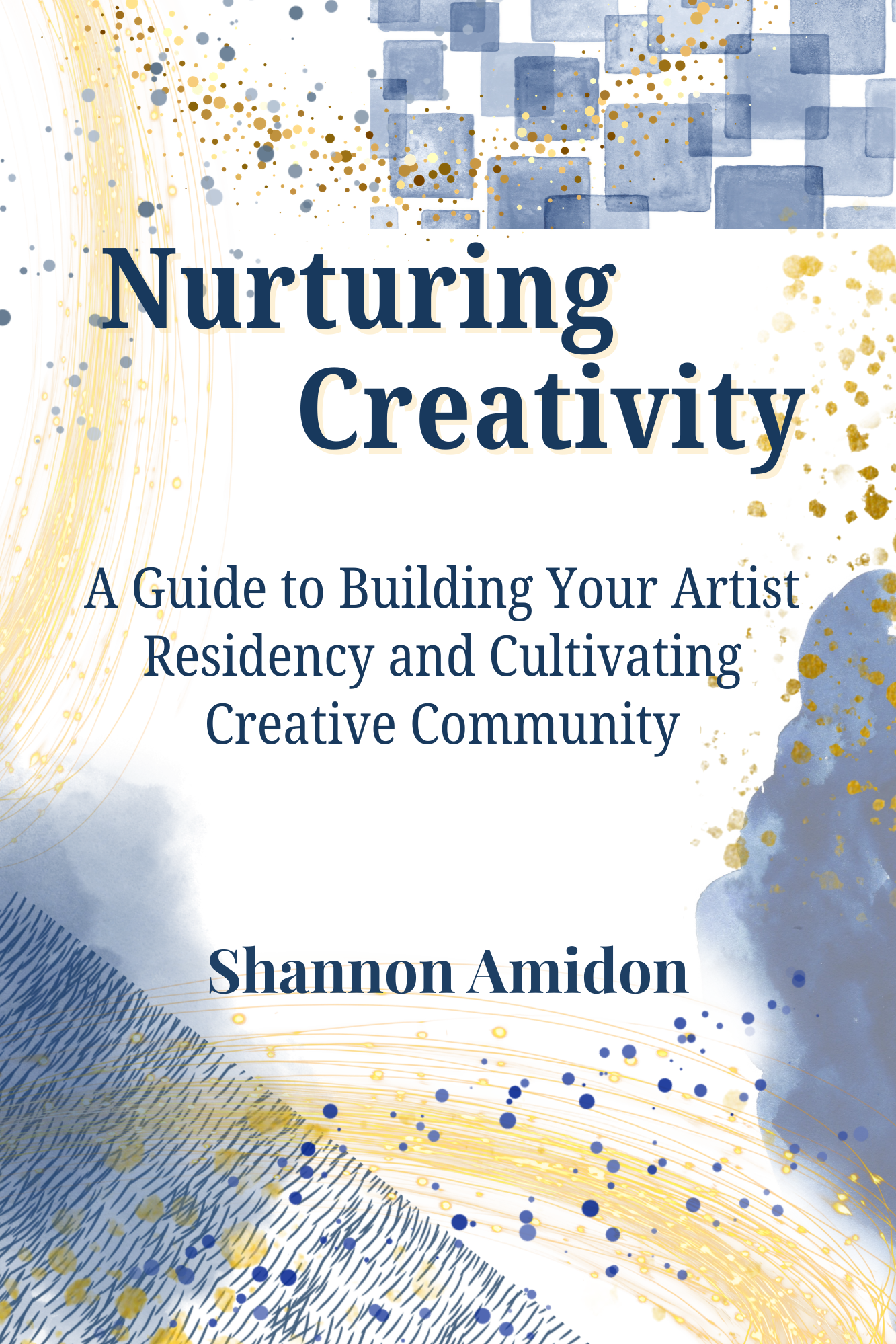
Many of the insights shared in these conversations helped shape my book:
Nurturing Creativity: A Guide to Building Your Artist Residency and Cultivating Creative Community
If you’ve ever wondered what it takes to create a residency or creative gathering of your own, the book expands on many of the lessons shared in these interviews.
Learn More Here