Conversations on Creative Residencies
The residencies featured in Nurturing Creativity are created and sustained by thoughtful artists around the world. These conversations offer additional insight into the joys, challenges, and unexpected lessons of building creative communities.
Some interviews are with residency founders and directors, while others share the perspective of artists who have participated in residencies around the world. Some are structured interviews, while others are informal conversations gathered over the phone. Together they offer a fuller picture of what it takes to create spaces where creativity can flourish.
In Situ Polyculture Commons
Website: insitupolyculture.org Social Media: Instagram Facebook Location: Westminster, VT on unceded Abenaki Land, the Dawnland of Turtle Island
“Different kinds of artists and makers are served by different residencies, so doing what feels both imperative and true to you will open up doors for the kinds of artists you are best fit to serve.” Candace Jensen - Co-founder, Programming Director
Kestrel Fields Studio
Website: kestrelfieldstudio.com
Social Media: Instagram Facebook
Location: Fort Collins, CO
“The most surprising part of starting this program has been how many people it has impacted in such a short time. People who have invested time in their creative selves at Kestrel Fields have left feeling more confident, in tune with their values, optimistic, and legitimate as artists.” - Heather Matthews - Founder
Enso Circle
“Focus on creating a space that feels safe, supportive, and encouraging. Artists thrive when they feel seen and valued. If you lead with that intention, your program will grow in ways you can’t predict—but they’ll be good ones”. - Michelle Belto and Lyn Belisle - Co-founders
Amy Guion Clay
Website: www.amyclay.com
Social Media: Instagram
After completing over 35 residencies around the world, Amy shares her wisdom on what makes a residency successful and meaningful.
It’s a wonderful thing to offer artists from around the world the opportunity to live and work in different environments globally, so I encourage anyone who is committed to the arts to create such a space! - Amy Guion Clay
Residency Director Conversations
These short summaries highlight key insights from informal Zoom conversations with residency directors about their programs, experiences, and lessons learned.
Biophilium
Website: www.artayatana.com
Social Media: Instagram Bluesky
Location: Online
About the Program
Alexis Williams is the founder of Biophilium, a program that brings artists and scientists together to explore topics in ecology, biology, and environmental research. Originally developed as an in-person residency experience combining field research with creative practice, the program has evolved into a dynamic online format that connects artists with researchers and experts from around the world.
Key Insights
Residencies can evolve and adapt to changing circumstances.
Alexis began hosting in-person programs that brought artists into the field to study ecology and biology with scientists. During the pandemic she transitioned to an online model, which unexpectedly expanded the reach of the program. Artists can now participate from anywhere in the world and connect with scientists who may be working in laboratories, universities, or remote field sites across multiple continents.
Accessibility can be a powerful outcome of virtual programs.
The shift to an online format made the program more accessible to artists who may not have the time, resources, or freedom to travel. Parents, artists with limited funding, and creatives in distant countries can now participate without the cost of airfare or housing.
Artists gain confidence by engaging deeply with scientific ideas.
One of Alexis’s observations is that artists often arrive curious about science but unsure whether they “belong” in that conversation. After participating in an immersive week of lectures, discussions, and research exploration, many artists leave feeling empowered to identify themselves as people studying evolution, ecology, or neuroscience through their artistic practice.
Creative community is often the most meaningful outcome.
Although many participants initially sign up to learn from scientists, Alexis notes that the strongest impact often comes from the connections artists make with each other. These relationships frequently continue long after the program ends.
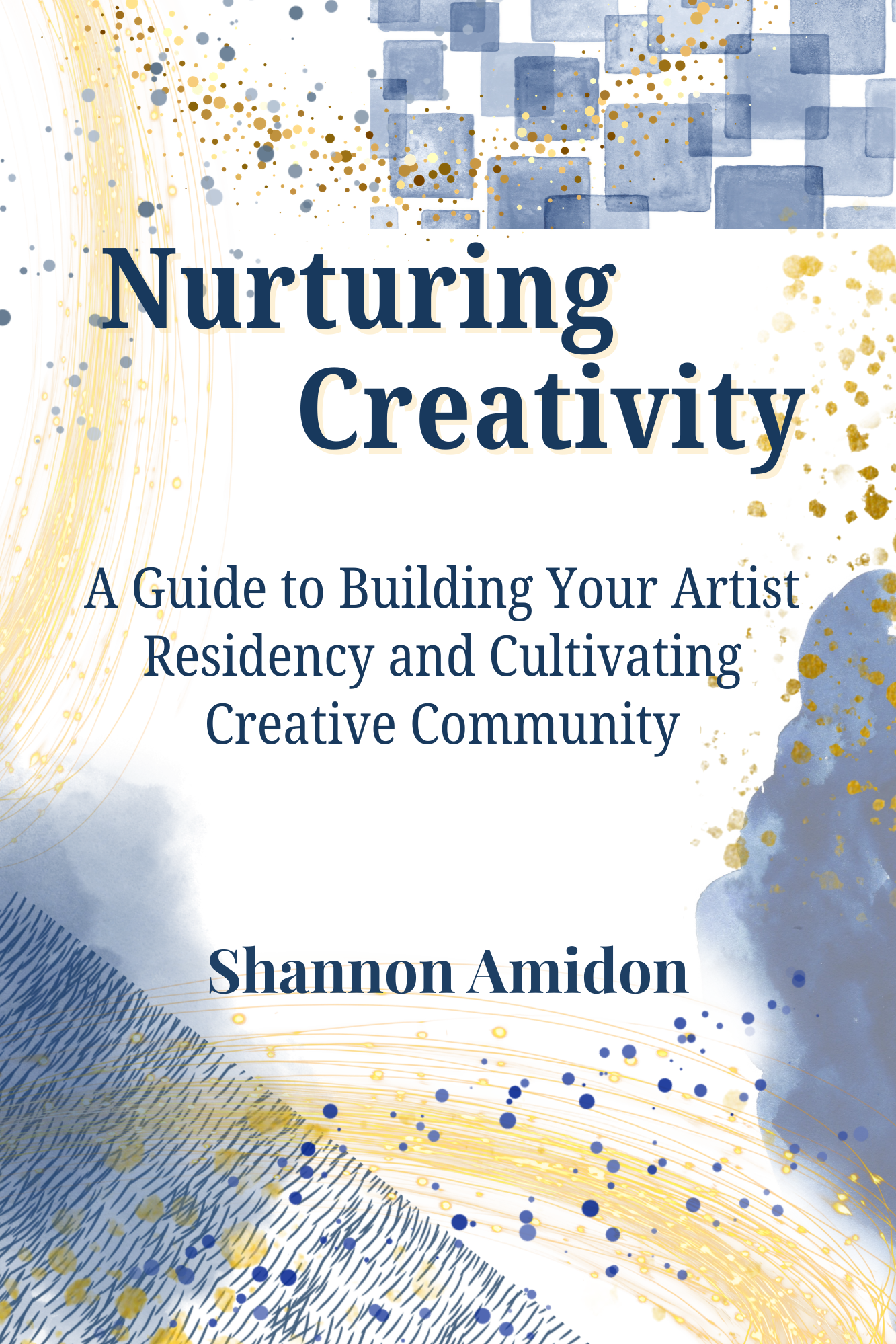
Many of the insights shared in these conversations helped shape my book:
Nurturing Creativity: A Guide to Building Your Artist Residency and Cultivating Creative Community
If you’ve ever wondered what it takes to create a residency or creative gathering of your own, the book expands on many of the lessons shared in these interviews.
Learn More Here
Upstate Artist Camp
Website: www.heatherpalecek.com/upstate-artist-camp-residency
Social Media: Instagram
Location: Eastern Adirondacks, NY
About the Program
Heather Palecek is the co-founder of a small artist residency located on a forested property designed to support artists working close to nature. The residency hosts artists in a rustic setting where they camp, cook outdoors, and create work surrounded by the natural landscape.
The program emphasizes simplicity, creative experimentation, and strong interpersonal connections between residents.
Key Insights
Residencies do not need elaborate infrastructure to be meaningful.
Heather began hosting artists on her land with very minimal facilities. Residents camp, cook outdoors, and work with the resources available around them. Rather than being a limitation, this simplicity often encourages creativity and experimentation.
Small residencies can foster powerful creative communities.
The program intentionally hosts only a small number of artists at a time. This allows residents to connect more deeply with one another and prevents the experience from becoming socially overwhelming or distracting from creative work.
Clear expectations help ensure a good fit.
Because the residency is rustic, Heather is careful to communicate expectations clearly to applicants. Artists must be comfortable working outdoors, camping, and creating without electricity or running water.
Word-of-mouth communities can be stronger than formal advertising.
Rather than relying on large residency databases, Heather primarily finds artists through social networks, personal referrals, and online communities. This approach has helped her attract artists who already share an interest in nature-based creative work.
Residencies often lead to lasting friendships.
Many artists stay in touch long after their residency ends, visiting each other’s exhibitions, collaborating on projects, and maintaining an ongoing creative network.
In Cahoots Residency
Website: incahootsresidency.com
Social Media: Instagram Facebook
Location: Petaluma, CA
About the program
Macy Chadwick is the founder of In Cahoots Residency, an artist-run printmaking residency based on her family property in California. Her program offers an inspiring example of a small, artist-led residency built outside traditional institutional models, with a strong focus on sustainability, creative exchange, and meaningful support for artists.
Key Insights
Build the program in a way that fits your values, not outside expectations.
One of the clearest themes in Macy’s interview is that artist-run programs do not need to follow the same path as larger institutions. She speaks candidly about choosing a structure that allows her to retain control, protect the spirit of the residency, and shape it around what is actually sustainable.
Small can be the right size.
Rather than viewing growth as the default goal, Macy speaks about the value of staying intentionally small. Her reflections challenge the assumption that successful programs must always expand and instead suggest that depth, quality, and sustainability may be far more meaningful measures of success.
Applications can reveal more than we think.
Another practical takeaway from the conversation is the importance of carefully reading applications and refining questions over time. Macy shares that, in hindsight, some difficult residency experiences were foreshadowed in the application itself. Clear expectations and meaningful questions help create a better fit for everyone involved.
Residencies often continue long after the stay is over.
Macy’s comments about alumni are especially moving. She describes former residents returning year after year, supporting fundraising efforts, staying connected online, and even collaborating together after their time at the residency. The residency becomes a place where lasting creative relationships can begin.
Vashon Artist Residency
Website: vashonartistresidency.com
Social Media: Instagram
Location: Vashon Island, WA
About the Program
Cathy Sarkowsky is the founder of Vashon Artist Residency, located on Vashon Island in Washington State. The program offers artists time and space to work in a peaceful coastal setting while engaging with a small community of fellow residents.
The residency grew from Cathy’s long-standing interest in artist residencies, which began after attending the prestigious Skowhegan School of Painting and Sculpture early in her career. Decades later, after raising her son and purchasing neighboring property on Vashon Island, she realized her long-held dream of creating a residency program of her own.
Key Insights
Residencies often begin as long-held personal dreams.
Cathy attended her first residency in 1993 and was deeply impacted by the experience. For many years she imagined creating a similar opportunity for other artists. When the neighboring property next to her home became available, the possibility finally became real.
Creative community can grow later in life.
Cathy launched the residency in her sixties and speaks openly about how meaningful it has been to begin a new chapter of creative community building later in life. Rather than feeling her world narrowing as she ages, she describes the residency as expanding it.
Intimate programs allow for deeper connection.
The residency hosts only four artists at a time, allowing participants to form meaningful relationships during their stay. A highlight of each session is a shared dinner and studio presentations where residents share their work and ideas with one another.
Residencies can evolve organically.
Cathy continues to develop partnerships within the local community from geologists leading educational walks to artists hosting workshops for the public. She is also expanding the residency with additional property that will eventually support alumni programs and visiting instructors.